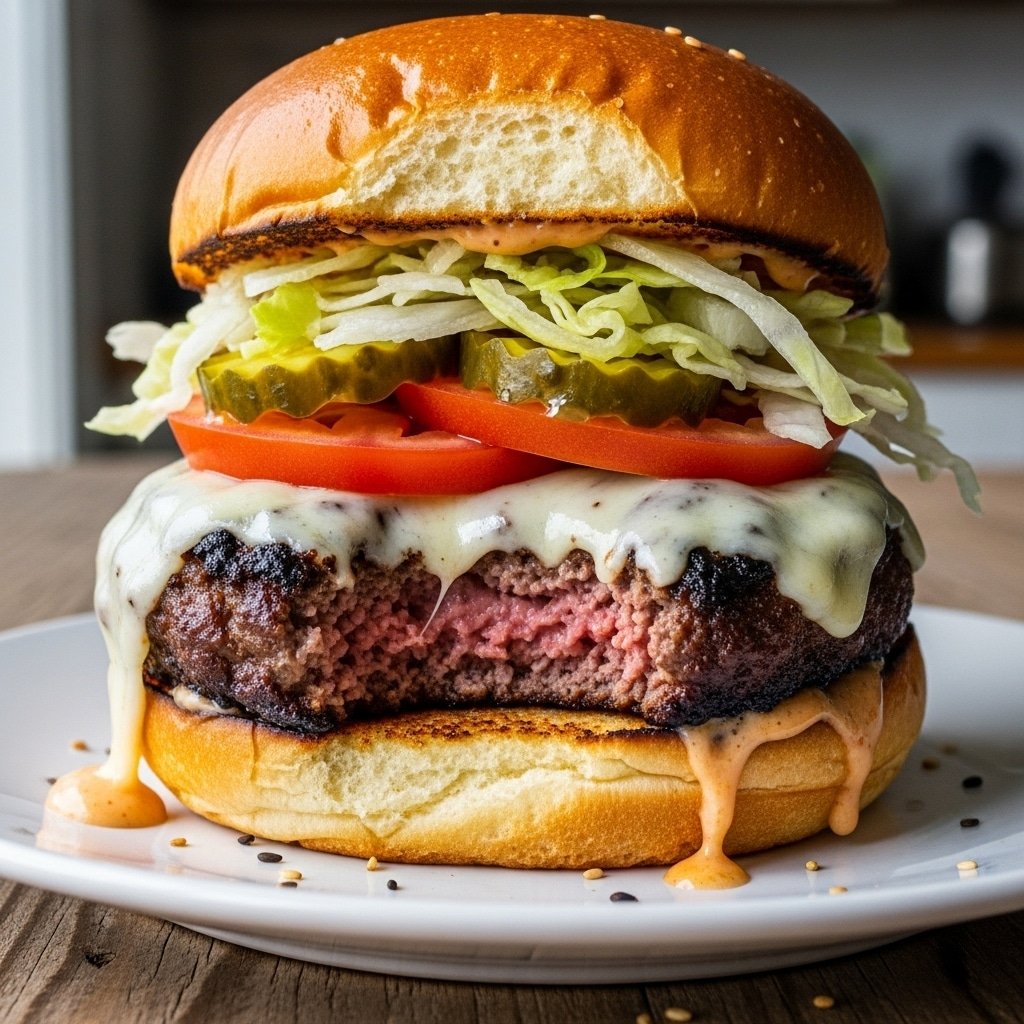
Ingredients
Equipment
Method
- Divide the cold beef into 4 equal portions (about 6oz each) or 8 portions for doubles. Roll into loose balls. Do not overwork the meat or season the inside.
- Heat a cast iron skillet over high heat for 5 minutes until it is smoking slightly. Do not add oil; the beef will provide its own lubricant.
- Place two beef balls in the skillet. Place a square of parchment paper over the meat and smash down hard with a heavy spatula until the patty is about 1/4 inch thick. Remove parchment.
- Season the top generously with salt and pepper. Let it sear undisturbed for 2 minutes until the edges are dark brown and crispy.
- Use a sharp metal spatula to scrape under the crust and flip. Immediately top with a slice of cheese. Cook for 60 more seconds.
- Toast your buns in the burger drippings. Build with sauce, lettuce, and the hot patty. Serve immediately.
Notes
The secret is the 'Scrape.' If you don't use a sharp metal spatula to get under that caramelized crust, you'll leave the best part of the burger stuck to the pan. Always use 80/20 beef for that essential 'fry-effect' on the edges.